


Meeting/Event Information
Ohio Chapter ASLA Annual Meeting + Expo
April 10, 2025
8:00 AM to 5:00 PM
Add to Calendar
Hilton Columbus Downtown
402 North High Street
Columbus, OH 43215
Directions
2025 Ohio Chapter Annual Meeting + Expo
Thank you to our Event Sponsor, Midstates Recreation.
Join the Ohio Chapter of ASLA (OCASLA) on Thursday, April 10th at the Hilton Downtown Columbus in Columbus for one of the biggest Chapter gatherings of the year!
This year's meeting will offer 4 Sessions, 5 Speakers, and 6 HSW LACES CEUs (pending).
Our Vendor EXPO will be available to all registrants throughout the day to see what new products and services they offer!
Following the 2025 OCASLA Annual Meeting, The Ohio Chapter ASLA will close with a reception and beverages open to all attendees, speakers, and sponsors.
We are also offering the opportunity ot donate to our student chapters when you buy your ticket; support our chapter and the future of profession today!
Agenda
(subject to change)
7:00 am - 8:00 am | Breakfast, Regisration & Vendor Expo #1
8:00 am - 8:30 am | Welcome and Year-in-review
8:30 am - 10:00 am | Session 1: From Afterthought to Forethought - Demetrios Staurinos - OLIN
10:00 am - 10:30 am | Break & Vendor Expo #2
10:30 am - 12:00 pm | Session 2: Working Landscapes: New Methods for Designing with Agriculture - Forbes Lipschitz - Knowlton
12:00 pm - 1:00 pm | Lunch & Vendor Expo #3
1:00 pm - 1:30 pm | Advocacy Update, Blythe Price & Luther Liggett, Esq.
1:30 pm - 3:00 pm | Session 3: Superbloom; Landscapes in S, M, L, & XL - Diane Lipovsky & Stacy Passmore - Superbloom
3:00 pm - 3:30 pm | Break & Vendor Expo #4
3:30 pm - 5:00 pm | Session 4: RoboRoots & Designer Shoots: AI's Rise in Landscape Architecture - Phil Fernberg - Utah State University
5:00 pm - 8:00 pm | Reception: open to all attendees (food and drink provided, no additional registration required)
Session One: From Afterthought to Forethought (Demetrios Staurinos)
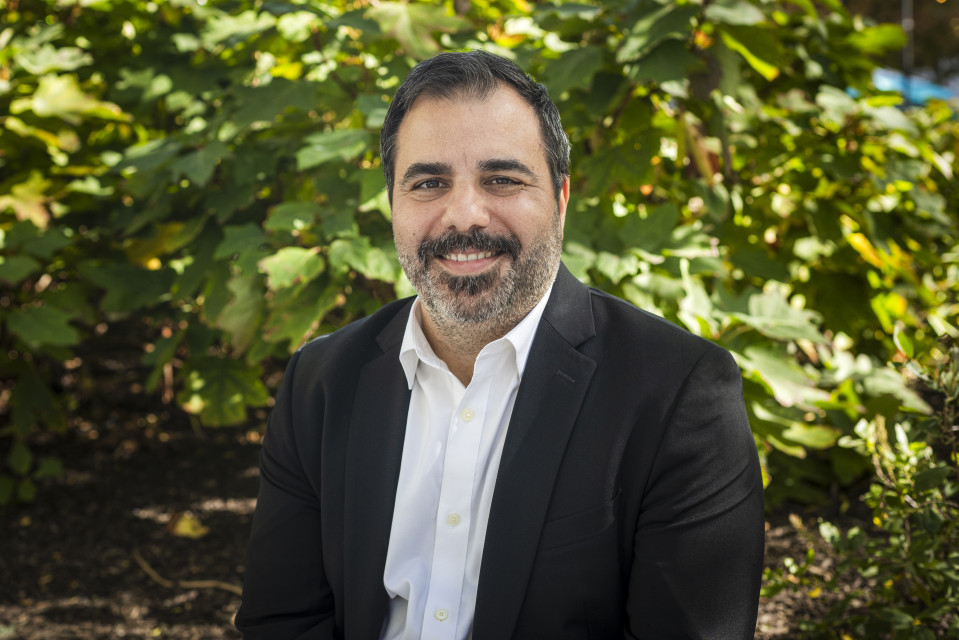
Photo Credit: Sahar Coston-Hardy
Demetrios Staurinos has over 20 years of professional experience in urban design and landscape architecture, designing projects from intricately executed gems like parks and playgrounds, to large-scale district plans—each focused on human experience within the urban environment. Demetrios is fascinated by the intersecting phenomena of people and natural systems and how they guide narratives of place. He is particularly interested in transformations that reveal new ways of moving, playing, and coming together. He draws inspiration from investigating cultural affectations that make a place unique and from the ecology that defines the geography where we live.
His recent work along waterfronts have been at the forefront of resilient design and environmental justice, combining infrastructural improvements with community needs for the enhancement of the public realm. He has recently completed the master plan for Dorchester Bay City in Boston Massachusetts, the extension of Mill River Park in Stamford, Connecticut, the vision plan for the Landscape of the Cathedral of Learning at the University of Pittsburgh, Lock 3 Park and the Bud and Susie Rogers Garden in Akron, OH, the signature Sturgeon playground addition to the design of Pier 26 in New York City, and several school playgrounds including the Mary McLeod Bethune School, in Philadelphia, Pennsylvania.
Demetrios teaches at the University of Pennsylvania, and has been a guest critic and lecturer at the Rhode Island School of Design, Penn State University, and the University of the West Indies in Kingston, Jamaica. He encourages his students to understand the context of each design problem, to make earnest assessments about the natural, economic, and cultural realities influencing their solutions and how those realities have meaning for us.
Session Two: Working Landscapes: New Methods for Designing with Agriculture (Forbes Lipschitz)
Conventional agriculture is the largest anthropogenic land use globally, yet it remains largely absent from landscape architectural discourse. This talk explores how landscape architects can engage with working landscapes—spaces of large-scale food production that shape ecologies, economies, and communities across multiple scales. From aquaculture systems to agricultural drainage networks, these landscapes present urgent challenges and design opportunities. By employing representation, design speculation, and interdisciplinary collaboration, landscape architects can help reimagine the spatial, environmental, and social dimensions of production systems. Through new approaches to site analysis, planning, and design intervention, this talk highlights strategies for integrating agricultural landscapes into broader discussions of sustainability, resilience, and land stewardship. Moving beyond urban farming and peri-urban agriculture, designers have the potential to influence the infrastructures and ecologies that define our food systems.

Forbes Lipschitz is an Associate Professor and the Graduate Chair of Landscape Architecture at the Knowlton School. As a faculty affiliate for the Initiative in Food and AgriCultural Transformation, her current research investigates the potential of design to reframe and reshape conventional working landscapes. Through public installations and participatory workshops, she explores ways for design to help communities better understand and engage with agricultural systems. Her research has been published nationally and internationally and her creative work has been featured in Landscape Architecture Magazine, Metropolis Magazine, and Smithsonian Magazine. She has been awarded funding from the Foundation for Food and Agricultural Research, the Graham Foundation for Fine Arts and the Van Alen Institute.
Session Three: Superbloom: Landscapes in S, M, L, XL (Diane Lipovsky and Stacy Passmore)
In his book S, M, L, XL, Rem Koolhaas framed scale in terms of domestic, public, and urban projects. At Superbloom, we’ve found that scale doesn’t always correlate with influence — even small landscape interventions can drive meaningful change at the urban and public level. This session will explore how thoughtful design, regardless of size, can shape communities and public spaces. Superbloom is a landscape architecture firm founded in Denver, Colorado, in 2021 by Diane Lipovsky and Stacy Passmore, alumni of the Harvard University Graduate School of Design. What began as a partnership has rapidly grown into a studio of 10 designers, with nearly 50 projects across the Intermountain West. The firm’s diverse portfolio includes climate adaptation planning, public park design, ecological landscapes, rewilding golf courses, and greening urban rooftops.
In this lecture, Stacy and Diane will share how their work spans multiple scales, illustrating how small interventions can lead to large-scale impact. They will discuss how new design approaches can address current and future challenges by transforming landscapes and making nature a celebrated part of our daily lives.
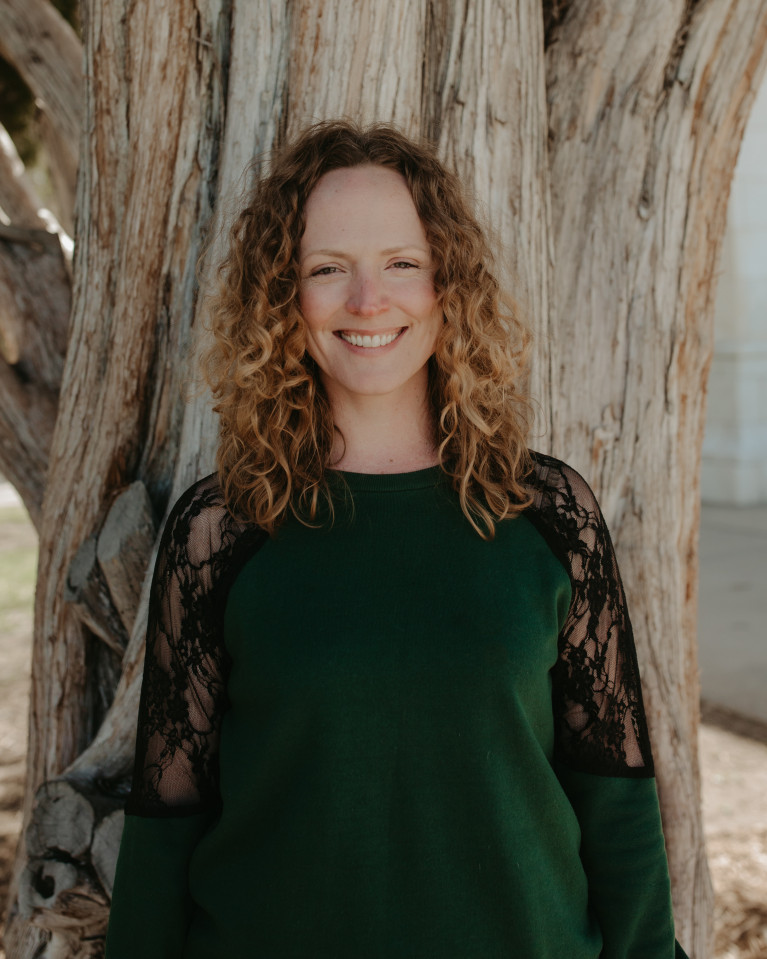

Diane Lipovsky is Co-Founder and Principal of landscape architecture studio Superbloom. With 15 years of experience, Diane creates landscapes that blend site-specific artistic vision, ecological sustainability, and human connection. Her work spans from intimate gardens to large-scale public spaces, uniting collaborators to craft landscapes that feel alive, support well-being, and spark curiosity. Diane partners with clients and communities to design landscapes that hit deep-rooted in research, shaped by craftsmanship, and elevated by creative storytelling. She holds a Master of Landscape Architecture from Harvard’s Graduate School of Design and a Bachelor of Arts in Cinema-Television from USC, combining analytical precision with the filmmaker’s eye for narrative.
A member of ASLA, Colorado Women in Design, and the Urban Land Institute, Diane has also served as Planning Commissioner for the City of Englewood. Her work has won national and international recognition, including from World Landscape Architecture, American
Architecture Award (Chicago Athenaeum), Jeff Harnar Awards, Architizer, and regional chapters of ASLA and the American Planning Association.
Stacy Passmore is a Principal and Co-Founder of Superbloom, a landscape architecture firm based in Denver, Colorado. Bringing vision and design leadership, she excels at synthesizing complex systems to create transformative and innovative landscapes. Stacy received a Masters of Landscape Architecture from Harvard University Graduate School of Design, a Masters of Community and Regional Planning from the University of British Columbia, and a Bachelor of Arts from New York University. She is committed to collaborations that celebrate the relationship between humans and ecological systems, work which she explores through built projects, publications, design research, and site-specific installations. Her honors include the Charles Eliot Fellowship and the Penny White Project Award from Harvard University, and her work has won awards from ASLA, World Landscape Architecture, Architizer A+, American Planning Association, the Congress for New Urbanism, and AIA Colorado. Before starting Superbloom, she worked for the New York City Department of City Planning, MASS Design Group, Agency Landscape and Planning and with private, public, and non-profit sectors in the U.S., Canada and Africa.
Her research has been published in Places Journal, the Urban Design Review, Platform X, Co-Existence, and the Journal of Ecological Restoration. She is a licensed landscape architect and a certified urban planner.
Session Four: RoboRoots & Designer Shoots: AI’s Rise in Landscape Architecture (Phil Fernberg)
In a world with increasingly intersecting environmental, social, and economic challenges - often termed 'wicked problems' - the role of landscape architects has never been more crucial nor has it ever been so complex. At the same time, advances in technology such as Artificial Intelligence (AI) have emerged as a potentially disruptive force that could revolutionize the industry. AI's predictive capabilities, data analysis, and computational design methodologies present possibilities for more evocative, resilient, equitable, and measurable designs. In this presentation, we will explore the potential of AI in tackling wicked problems in landscape architecture and environmental planning. We'll examine case studies of AI integration in the field, debate its ethical implications, and probe its potential to either augment or hinder the value of the profession. From Generative AI applications optimizing residential garden design to robots monitoring wetland restoration and dry stacking stone walls, I will show you compelling case studies of how AI can be a collaborator—not just a tool—in the design and planning process, and how that emergent relationship should make us to think differently about our practice and business models.

Phillip Fernberg, Ph.D., ASLA, is a researcher, educator, and innovation strategist who works at the nexus of emerging technology, environmental policy, and organizational management in the design professions. He utilizes advanced tools and methods to work on a variety of research problems ranging from AI-Human partnering and digital culture in the design professions to complex land and water modeling problems facing Utah’s Great Salt Lake basin. Phil has previously worked as a tech and innovation director at OJB Landscape Architecture, researcher and instructor in the Visualization, Instrumentation and Virtual Interaction Design (VIVID) Laboratory at Utah State University (USU), and designer at RHAA Landscape Architecture and Planning. He will be joining USU as Assistant Research Professor in July of this year.
Rates:
ASLA Member (Regular Rate): $275)
Non-ASLA Member (Regular Rate): $350
Student (Regular Rate): $75
Vendor Expo Booth Registration (Regular Rate): $1,000
Gold Level Sponsorship includes space at the exhibition and 1 complimentary ticket.
Platinum Level Sponsorship includes space at the exhibition and 2 complimentary tickets.
Additional sponsor tickets can be purchased for $75.
No refunds and no day of registrations will be provided.
Tickets
$0.00 Student Chapter ASLA Donation
Future Meetings
Parkitecture: Autumn Edition
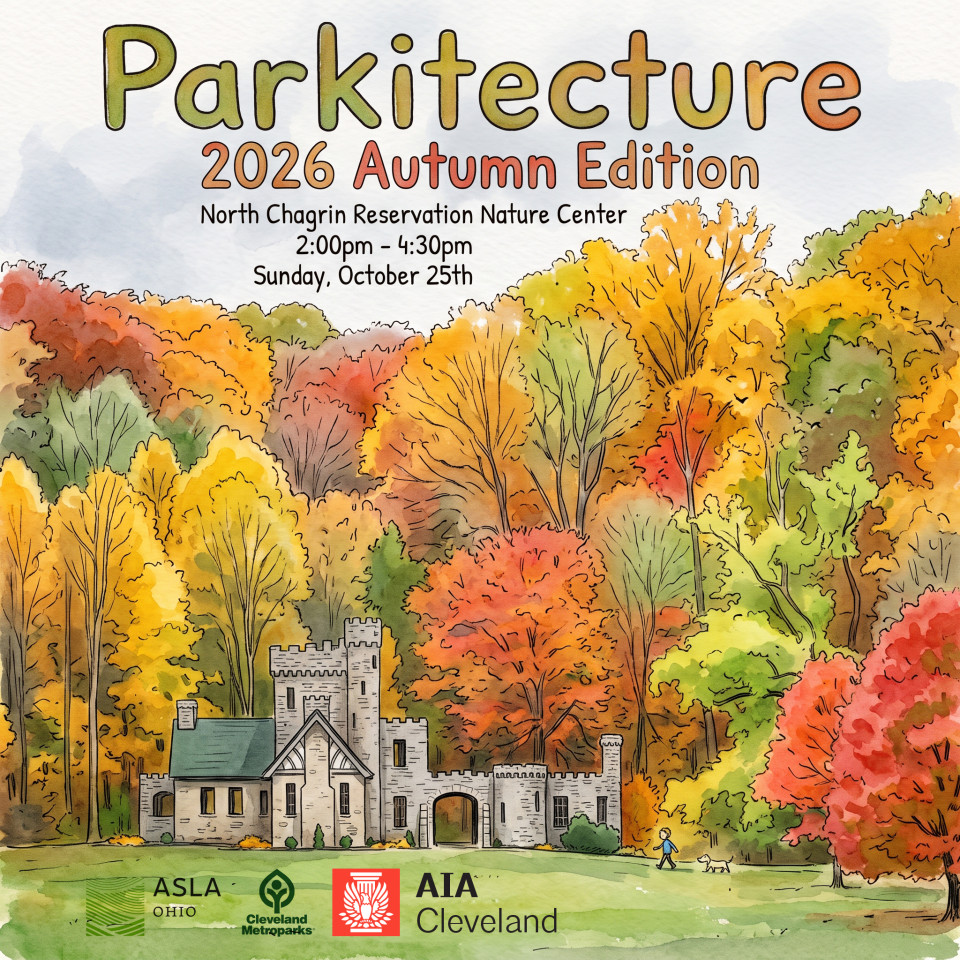
October 25, 2026
2:00 PM to 4:00 PM
North Chagrin Reservation
401 Buttermilk Falls Parkway
Willoughby, OH 44094
https://events.ticketleap.com/tickets/aiacleveland/parkitecture-fall-edition
Explore the North Chagrin Reservation in all its fall glory!
2026 Tree Professionals Seminar
December 03, 2026
8:30 AM to 4:00 PM
OKI Regional Council of Governments
720 E Pete Rose Way, Fourth Floor
Cincinnati, OH 45202
Join us for the 2026 Tree Professionals Seminar, where we bring together experts dedicated to tree planting and tree health.
2026 Ohio ASLA End of the Year Celebration + Awards Gala

December 03, 2026
6:00 PM to 10:00 PM
The Ellis
777 North 4th Street
Columbus, OH 43215
https://theellis.biz/
